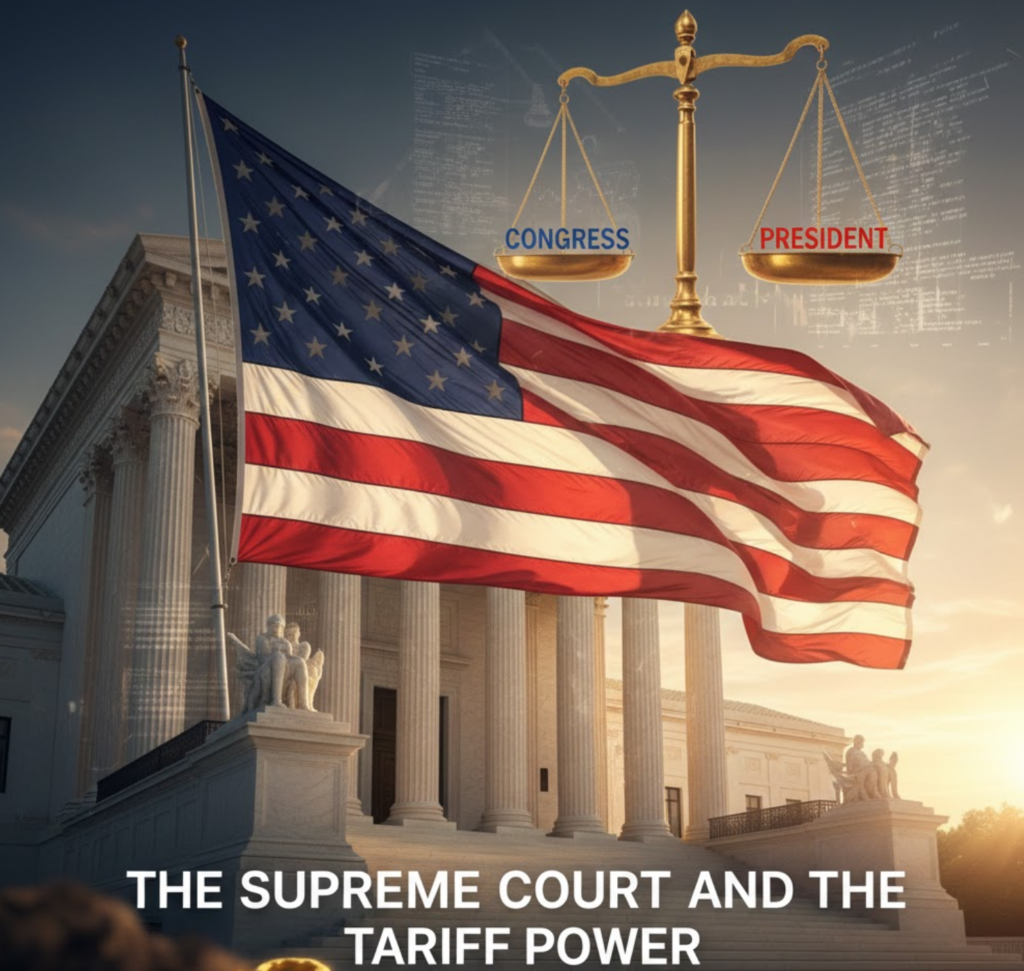
Introduction: A Constitutional Crossroads
The American economy stands at a historic juncture as the Supreme Court prepares to rule on the extent of executive tariff authority. At the heart of this legal battle is a fundamental question that goes to the core of our republic: Does the President possess the unilateral power to reshape national trade policy in the name of security, or must this authority remain firmly rooted in the halls of Congress? For those of us at Top Path to Liberty, this is not merely a debate over economics; it is a vital test of our commitment to the separation of powers and the protection of individual freedom.
The Case for Sovereignty: America First and National Security
Proponents of broad executive power, often representing the “America First” wing of the conservative movement, argue that tariffs are a non-negotiable tool for protecting national sovereignty. They contend that in an era of global instability and unfair trade practices by adversaries, the President must have the agility to impose tariffs to protect domestic industries and secure vital supply chains. From this perspective, the “National Security” justification (Section 232) is a necessary evolution of executive duty, ensuring that the American worker is not sacrificed at the altar of radical globalism.
The Case for Liberty: Free Markets and Constitutional Limits
However, a second, equally vital conservative tradition—rooted in libertarian and free-market principles—warns of the dangers of an “Imperial Presidency.” This wing of the movement reminds us that the Constitution explicitly grants the power to “lay and collect Taxes, Duties, Imposts and Excises” to Congress, not the Executive Branch. When a single individual can impose sweeping taxes on American consumers through tariffs, the risk of government overreach grows. True liberty requires a system where no branch of government is above the law, and where the marketplace remains free from arbitrary political interference that inevitably leads to higher costs for everyday families.
Conclusion: Reclaiming the Path to Liberty
The Supreme Court’s upcoming decision will define the boundary between necessary statecraft and constitutional overreach. While the protection of national interests is essential, it must never come at the expense of the very constitutional framework that makes America free. As we await the Court’s word, we remain steadfast in our belief that the path to a prosperous future lies in a government that respects its limits and a people who are free to trade and thrive without the heavy hand of unchecked bureaucracy.
Essential Reference Links
- SCOTUSblog: Ongoing Coverage of Trade and Tariff Cases
- Cato Institute: The Constitutional Argument for Free Trade
- Heritage Foundation: The Role of Tariffs in National Security